
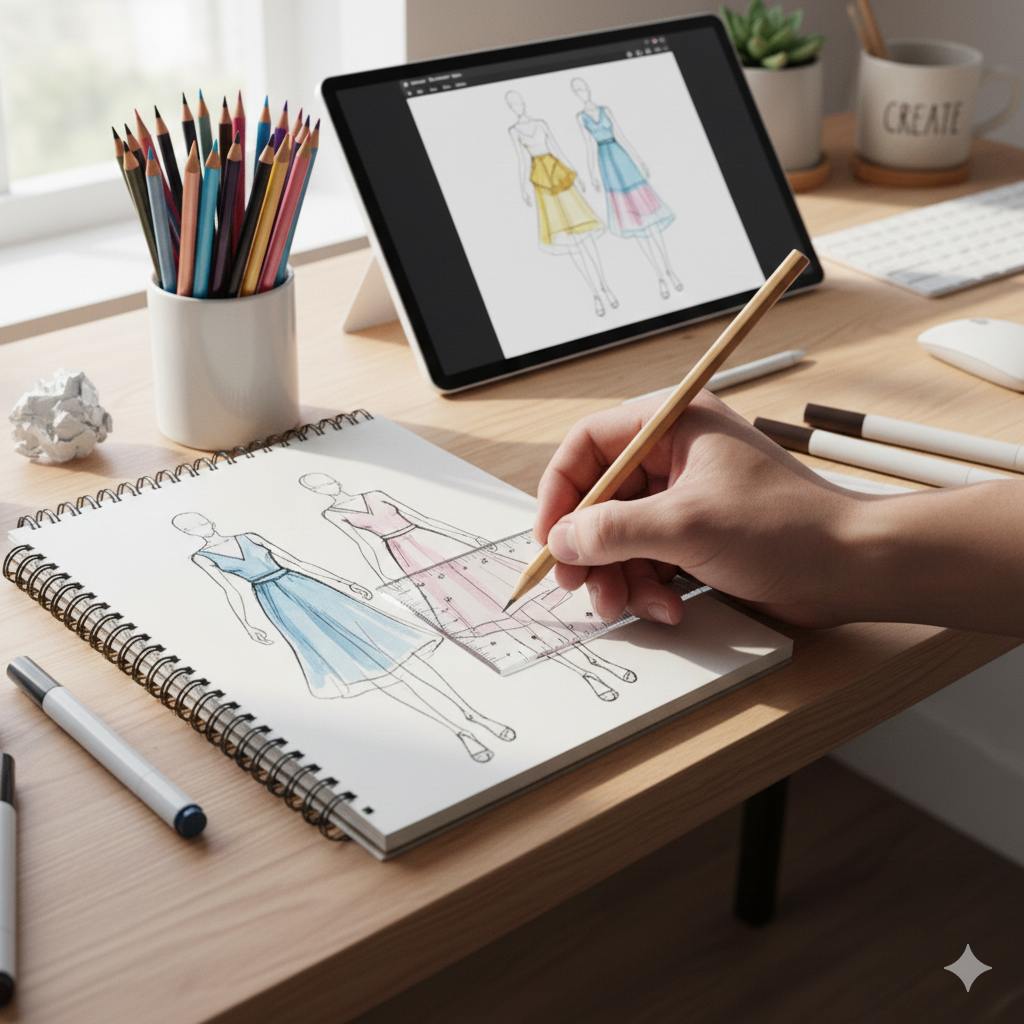
I started fashion sketching to express my clothing ideas on paper using simple drawing techniques. Through fashion illustration basics and outfit sketching, I learned how designers visualize concepts. This creative skill helps beginners turn imagination into clear fashion design sketches. The sketch outfits for beginners guide helped me understand body proportions and clothing flow easily.
Fashion sketching is not about perfect art but about understanding garment design drawing. I focused on learning rough lines, body balance, and basic fashion proportions. With regular practice, sketching outfits became an enjoyable part of my design journey.
Basics of Outfit Drawing
Outfit drawing starts with understanding simple fashion illustration basics and clothing structure. Beginners should focus on clean lines, basic shapes, and correct garment placement. Learning these fundamentals helps create balanced and realistic outfit sketches.
Fashion sketching basics also include drawing light guidelines before adding details. These guidelines help maintain proportion and improve outfit symmetry. This step makes beginner outfit drawing more accurate and easier to manage.
Understanding fabric flow is another key part of outfit drawing for beginners. Clothes should follow body movement and natural folds. Practicing simple outfits helps improve garment sketching skills over time.
Tools Needed for Fashion Sketching
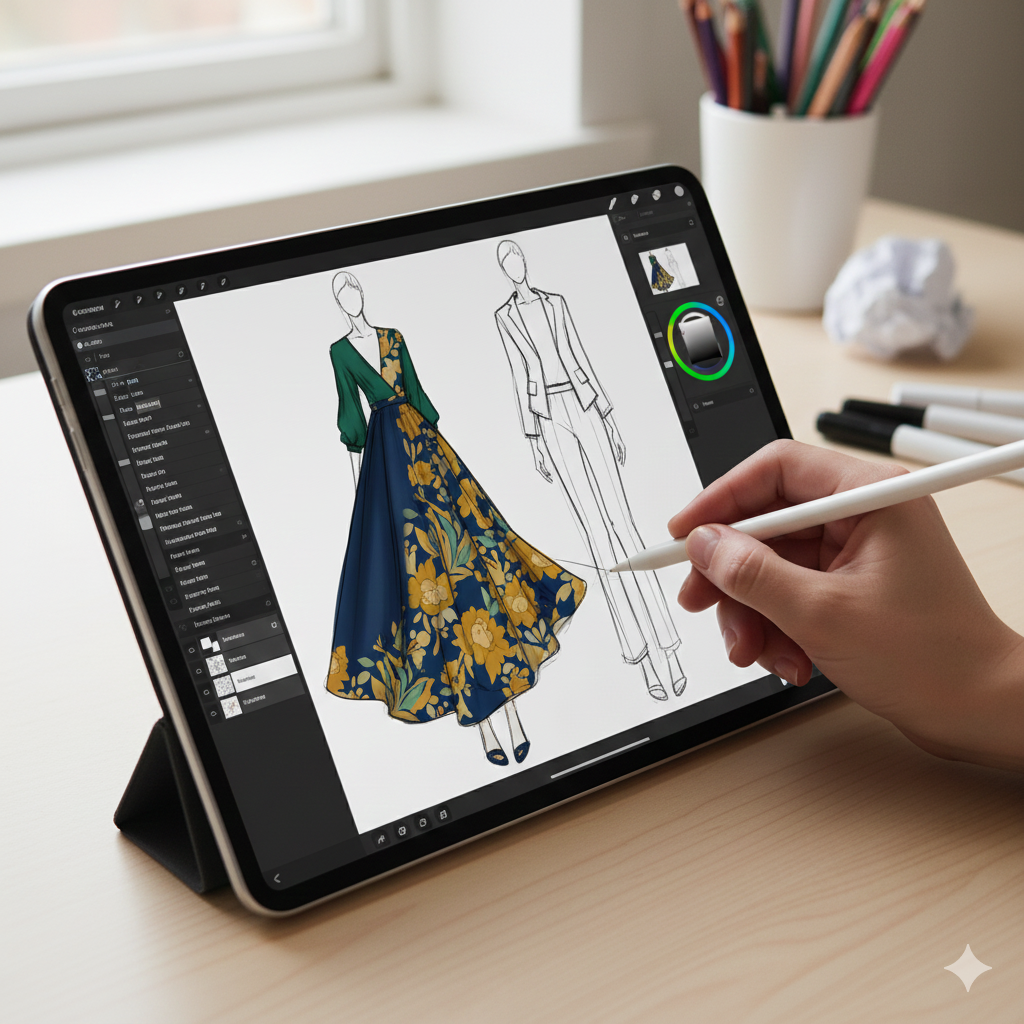
Fashion sketching requires a few essential tools to get started effectively. Traditional tools include pencils, erasers, sketchbooks, fine liners, and markers, which help in practicing lines, shading, and basic designs. Using quality supplies makes it easier to create clean and professional-looking sketches.
Digital tools are also popular for beginners who want to experiment with technology. Tablets, stylus pens, and fashion sketching apps allow easy editing, layering, and coloring. Combining traditional and digital methods can improve skills and make fashion illustration more versatile.
Understanding Fashion Figure Proportions
Fashion figure proportions are essential for creating balanced and realistic outfit sketches. Beginners should focus on standard ratios, like head-to-body measurements, to maintain proper scale. Correct proportions ensure garments look natural on the figure. I follow tips from the sketch outfits for beginners guide to improve my fashion illustrations every day.
Key proportions include the length of the torso, legs, and arms, which guide how clothes fit the body. Fashion illustrators often use simplified body ratios to make sketching easier and consistent. Properly proportioned figures make outfit designs appear professional and visually appealing.
Creating the Fashion Croquis
A fashion croquis is the basic body outline used to sketch clothing designs. It helps maintain correct proportions and provides a framework for garments. Beginners should start with simple lines and shapes to form the head, torso, and legs.
The croquis allows designers to visualize how clothes will fit and move on the body. Using guidelines for shoulders, waist, and hips ensures balance in each sketch. This step is essential before adding details, fabric flow, or design elements to the outfit. The sketch outfits for beginners steps make creating realistic croquis and poses much simpler for me.
Learning Fashion Poses and Gestures
Fashion poses and gestures are essential to make outfit sketches look lively and realistic. Using natural body movements helps show how clothes fit and flow on the figure. Beginners should start with simple standing poses before trying dynamic or action poses.
Understanding gestures improves the overall balance and proportion of fashion illustrations. Quick gesture sketches allow designers to practice movement and posture without focusing too much on details. This technique also helps in visualizing how fabrics drape on different body types.
Sketching Clothes on the Body
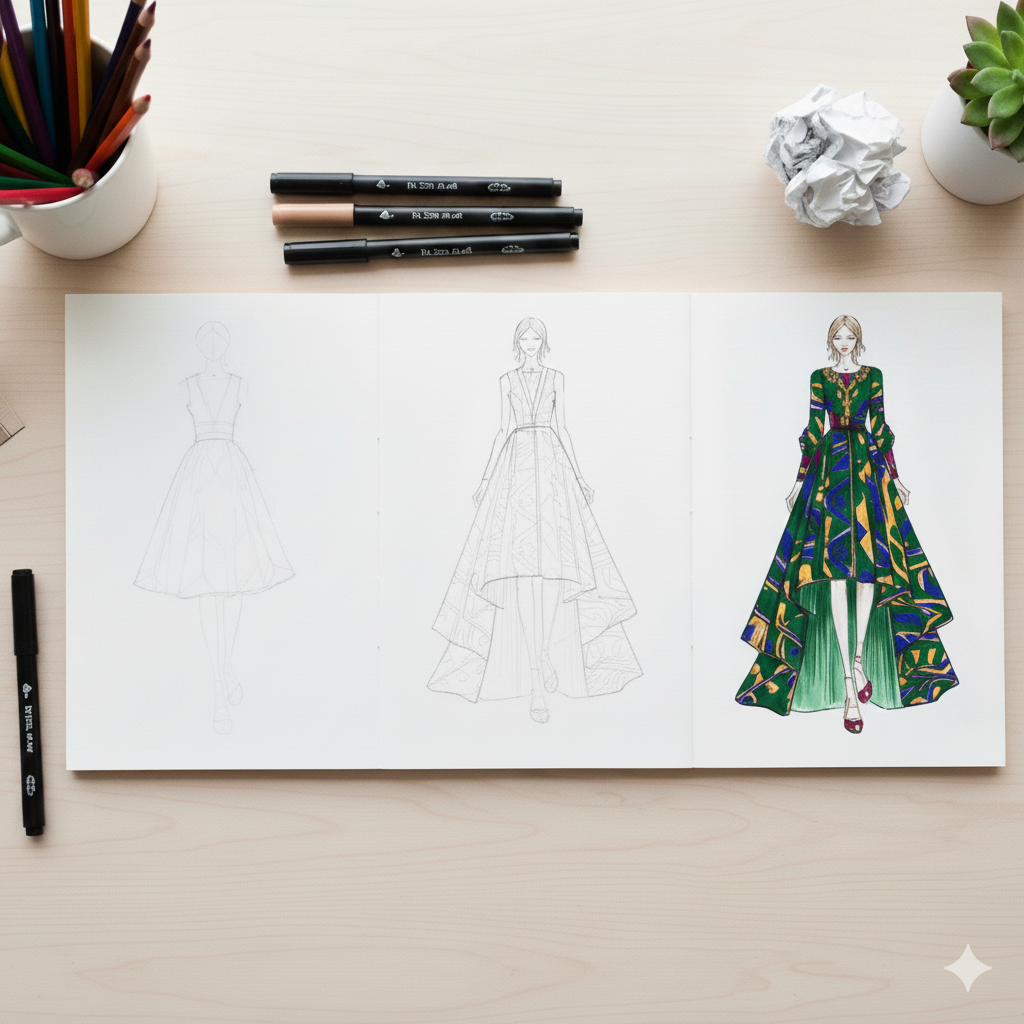
Sketching clothes on the body requires understanding how garments naturally fall over the fashion croquis. Designers should start with basic outlines of shirts, dresses, or pants to ensure the proportions match the figure. Using light guidelines helps maintain symmetry and balance while adding outfit details.
Adding details like collars, sleeves, and hemlines brings the sketch to life. It is important to consider the garment’s shape, drape, and fit when drawing. Practicing different types of clothing, from structured jackets to flowing dresses, improves accuracy in fashion sketches.
Showing Fabric Flow and Movement
Understanding how fabric moves on the body is essential in fashion sketching. Soft fabrics like chiffon or silk flow naturally, while stiffer materials like denim or wool hold their shape. Capturing the difference helps make sketches look realistic and dynamic.
Techniques such as curved lines, light folds, and overlapping shapes can show motion in skirts, dresses, and sleeves. Adding small creases and natural drapes gives garments a lifelike appearance. Properly illustrating fabric flow enhances the overall quality of outfit sketches.
Adding Design Details and Textures
Adding design details and textures is essential to make outfit sketches look realistic and visually interesting. Patterns, prints, and small embellishments give clothing a unique character. Using simple lines and shapes can represent textures like lace, denim, or embroidery effectively.
Textures help illustrate how different fabrics behave and feel. Cross-hatching, stippling, or light shading can indicate material thickness or softness. Including these elements makes fashion sketches more professional and detailed for presentations or portfolios.
Improving Line Work and Shading
Clean line work is essential for clear and professional-looking fashion sketches. Using steady, consistent strokes helps define the outfit’s shape and details accurately. Beginners should practice drawing straight and curved lines to improve control.
Shading adds depth and dimension to garment sketches, making fabrics and textures look realistic. Lightly build shadows with pencils or markers, focusing on folds, pleats, and overlaps. Proper line quality combined with shading enhances the overall appearance of fashion illustrations.
Coloring Outfit Sketches
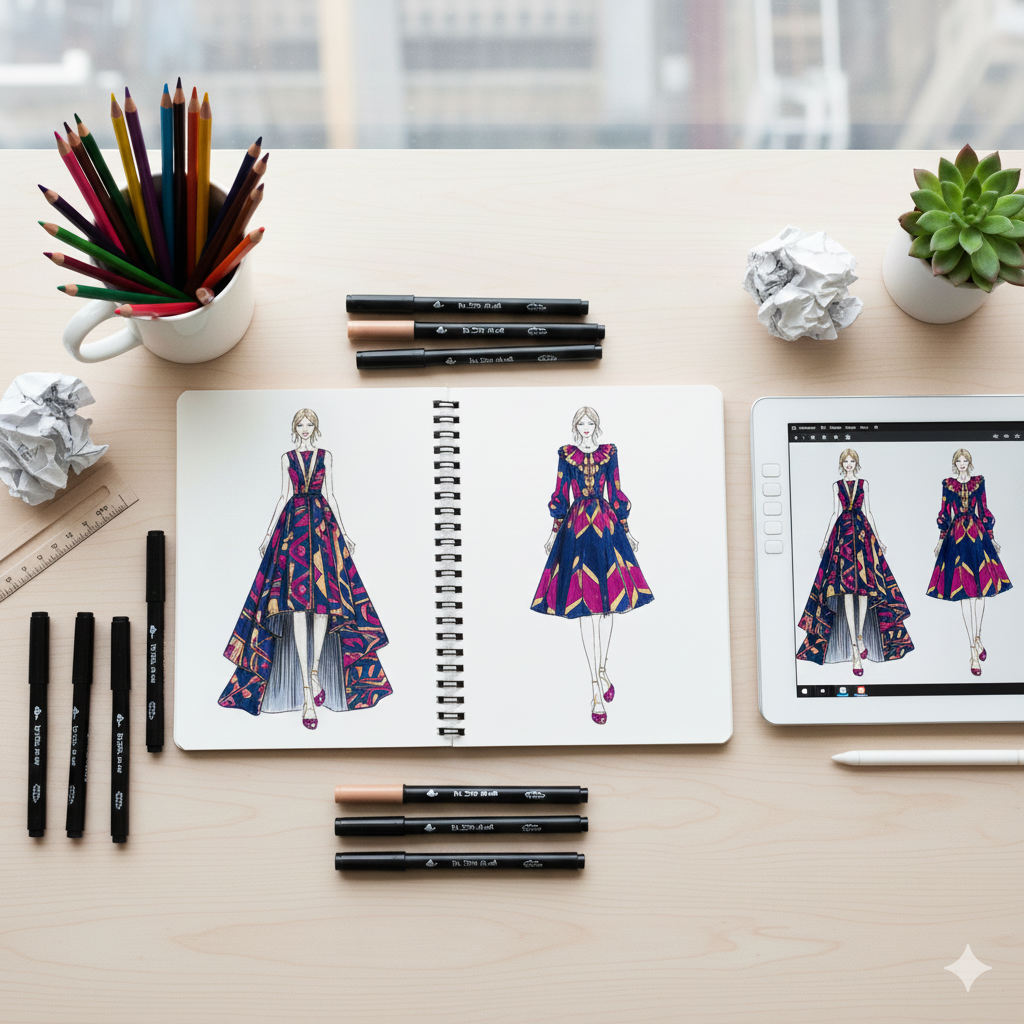
Coloring outfit sketches helps bring fashion designs to life and shows the texture and style of garments. Using markers, colored pencils, or digital tools can make the illustrations more vibrant. It is important to choose colors that complement each other and reflect the fabric type.
Beginners should start with simple color palettes and gradually experiment with shading and gradients. Adding highlights and shadows can create depth and make the outfit appear more realistic. Consistent practice in coloring improves accuracy and enhances the overall fashion sketch.
Digital Outfit Sketching for Beginners
Digital outfit sketching allows beginners to create fashion illustrations using tablets, stylus pens, and software. It helps streamline the design process and makes editing easier than traditional paper sketches. Beginners can experiment with colors, layers, and textures without wasting materials.
Popular fashion sketching apps like Procreate, Adobe Fresco, and Clip Studio Paint provide tools for drawing, shading, and adding details. These apps also allow saving multiple versions of a design and sharing work online. Using digital tools enhances precision while maintaining creativity in outfit sketches.
Learning digital fashion illustration includes understanding layers, brushes, and color blending. Beginners should start with simple croquis and gradually add garments and accessories. Consistent practice with digital tools improves speed and overall outfit sketching skills.
Practicing and Improving Sketching Skills
I practice sketching outfits every day to improve my fashion illustration skills. By drawing different poses and garment styles, I notice my sketches become more confident and realistic. Simple daily exercises help me understand proportion, movement, and fabric flow better.
I also study real outfits and fashion photos to improve my designs. Observing how clothes fit and flow on the body inspires me to add more detail and texture to my sketches. This consistent practice helps me grow as a beginner fashion illustrator.
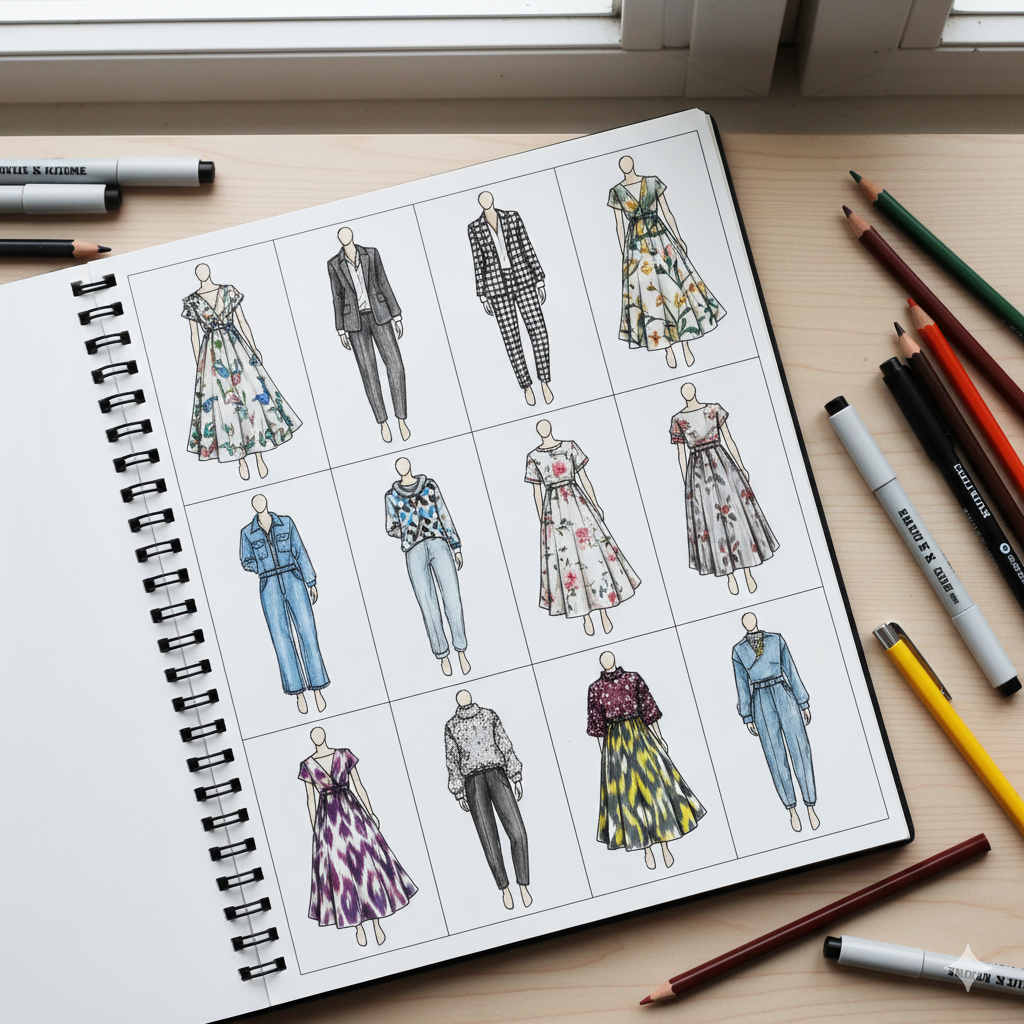
Building a Beginner Fashion Sketch Portfolio
A beginner fashion sketch portfolio is a collection of your best outfit sketches that shows your progress and creativity. It should include different clothing types, poses, and fabric textures to highlight your versatility.
Organizing sketches neatly makes the portfolio look professional and easy to review. Including both hand-drawn and digital sketches can demonstrate your range of skills. I enjoy experimenting with colors and fabrics after learning techniques from the sketch outfits for beginners guide.
Beginners should focus on quality over quantity, selecting sketches that best represent their understanding of proportions, design details, and garment flow. A well-prepared portfolio helps in applying for fashion courses or sharing work with potential clients.
Conclusion
I feel that learning how to sketch outfits for beginners is all about practice and understanding the basics. Focusing on body proportions, fabric flow, and fashion poses makes sketches look realistic and stylish.
For me, using the right tools, both traditional and digital, has made the process easier and more enjoyable. Daily practice and experimenting with textures, patterns, and colors improve my skills quickly.
I notice that building a small portfolio helps track progress and boosts confidence. Sketching outfits now feels fun and creative, and I am motivated to keep learning.
FAQs
1. What is the best way for beginners to start sketching outfits?
I start with simple body guidelines, or croquis, and gradually add clothes, keeping proportions in mind.
2. Do I need expensive tools to sketch fashion outfits?
Not at all. I use basic pencils, markers, and sketchbooks. Digital tools, such as tablets, help, but aren’t necessary.
3. How can I improve my fashion sketching skills quickly?
Daily practice, studying poses, observing real outfits, and experimenting with textures and colors help me improve fast.
4. Should beginners focus on line work or coloring first?
I focus on clean line work first, then add shading and color to bring the outfit to life.
5. How do I create a portfolio as a beginner?
I include my best sketches, which showcase various garments, fabrics, and poses. This helps track progress and showcase my skills.

Leave a Reply